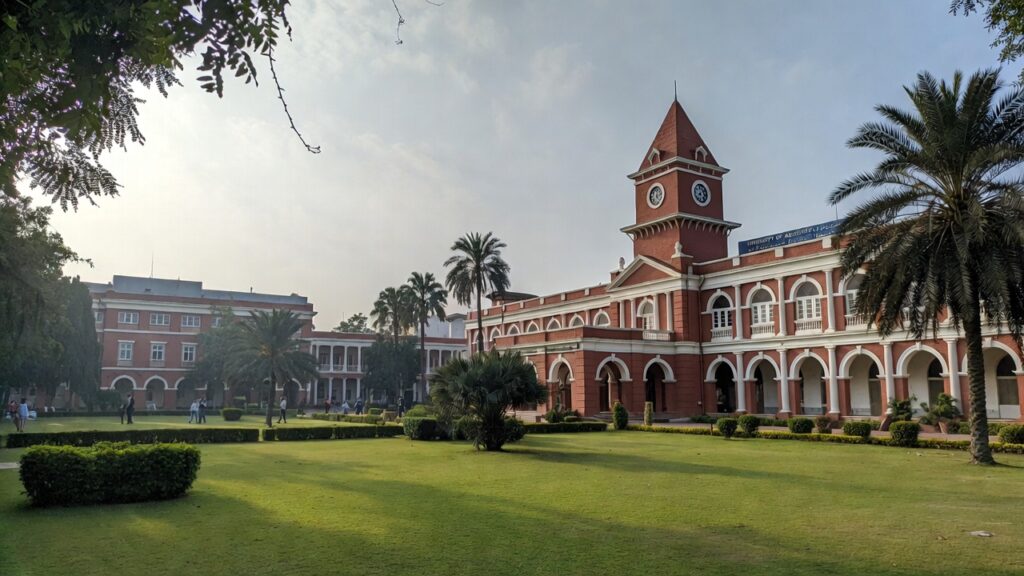
If Pakistan’s agriculture has a heartbeat, it pulses from a sprawling campus in Faisalabad. The University of Agriculture, Faisalabad — known simply as UAF — is not just an institution of learning. It is the backbone of agricultural science in Pakistan, a place where generations of researchers, agronomists, and policy-makers have been shaped, and where the ideas that feed a nation of 230 million people are born.
For over a century, UAF has stood at the intersection of education, innovation, and national development. Its story is inseparable from Pakistan’s journey — from the colonial era, through the struggles of independence, to the Green Revolution, and into the challenges of 21st-century food security. Understanding UAF’s history is, in many ways, understanding how Pakistan learned to feed itself.
The Seed Is Planted: Founding of the Punjab Agricultural College (1906)
Long before Pakistan existed as a nation, British colonial administrators recognized something important: the Punjab was fertile, its rivers generous, but its farming practices were stuck in another century. To modernize agriculture across the subcontinent, they needed trained professionals who understood both science and soil.
In 1906, the Punjab Agricultural College and Research Institute was established in Lyallpur — the city we now call Faisalabad. The location was no accident. Lyallpur had been developed as a planned colonial city in the heart of one of the most productive agricultural belts in the world, fed by the great canal irrigation networks of the Punjab.
The college began with a modest mandate: train agricultural officers, conduct field research, and introduce scientific methods to a predominantly traditional farming community. Its early curriculum blended practical fieldwork with theoretical science, a pedagogical philosophy that would define the institution for decades to come.
In those early years, the institution produced the region’s first generation of formally trained agricultural scientists — men who would go on to introduce new seed varieties, improve irrigation practices, and lay the groundwork for modern farming across undivided India.
Through Partition and Into a New Nation (1947)
The partition of 1947 was a seismic event for every institution on the subcontinent. For the Punjab Agricultural College, it meant a sudden shift in context, mission, and governance. Overnight, it became a Pakistani institution — one of the few functioning centers of agricultural science in a newly born country that desperately needed to establish food self-sufficiency.
The years immediately following independence were challenging. Resources were stretched thin, faculty had to be rebuilt, and the new government of Pakistan was still finding its footing. Yet the college endured. It continued training agricultural graduates and conducting research, serving as a quiet but essential pillar of the young nation’s development infrastructure.
Through the late 1940s and 1950s, the institution steadily expanded its academic programs and research activities, building toward a transformation that would come in the next decade.
A University Is Born: The Transition of 1961
The most defining moment in the institution’s history came on October 21, 1961, when the Punjab Agricultural College and Research Institute was formally elevated to the status of a full university — the University of Agriculture, Faisalabad.
This was more than a change of name. It was a declaration of ambition. By granting university status, the Government of Pakistan signaled that agricultural education deserved the same academic standing as any other discipline — that the science of farming was as rigorous, as vital, and as worthy of advanced scholarship as medicine, law, or engineering.
With university status came expanded powers: the ability to award degrees up to the doctoral level, establish new faculties, launch postgraduate research programs, and forge institutional partnerships. UAF seized these opportunities with both hands.
The 1960s marked the beginning of a rapid academic expansion. New departments were created, international collaborations were formed, and a new generation of Pakistani agricultural scientists began emerging from UAF’s lecture halls and research laboratories.
UAF and the Green Revolution: Feeding a Growing Nation
No chapter in UAF’s history is more consequential than its role in Pakistan’s Green Revolution of the 1960s and 1970s. When high-yielding seed varieties, chemical fertilizers, and modern irrigation techniques swept through South Asia, UAF was at the scientific center of Pakistan’s response.
UAF researchers worked alongside international bodies — including the Food and Agriculture Organization (FAO) and the International Maize and Wheat Improvement Center (CIMMYT) — to test, adapt, and introduce improved wheat and rice varieties suited to Pakistani conditions. The results were transformative. Pakistan’s wheat production, for instance, more than doubled between the mid-1960s and mid-1970s, pulling the country back from the brink of recurring food crises.
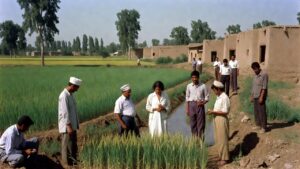
Faculty members from UAF trained thousands of agricultural extension workers who fanned out across rural Punjab, teaching farmers how to use new seeds, apply fertilizers correctly, and manage water more efficiently. It was painstaking, grassroots-level work — and it worked.
The Green Revolution is often credited to policy and politics, but the scientific muscle behind it in Pakistan belonged significantly to UAF.
Decades of Growth: Academic and Infrastructural Milestones
From the 1970s onward, UAF underwent continuous expansion, both in academic scope and physical infrastructure.
Academic Expansion
The university progressively added faculties to reflect the evolving needs of Pakistan’s agricultural sector:
- Faculty of Agriculture — the original core, covering agronomy, soil science, plant pathology, entomology, and plant breeding
- Faculty of Agricultural Engineering and Technology — addressing mechanization and irrigation engineering
- Faculty of Animal Husbandry — covering veterinary science, livestock management, and dairy technology
- Faculty of Sciences — incorporating chemistry, mathematics, statistics, and computer science
- Faculty of Social Sciences — recognizing that agricultural development is also an economic and social challenge
- Faculty of Food, Nutrition and Home Sciences — responding to growing concerns around food safety and public nutrition
Each new faculty represented UAF’s understanding that feeding a nation requires more than agronomy alone — it demands engineers, economists, nutritionists, and technologists working in concert.
Research and Innovation
UAF established numerous specialized research institutes and centers on campus, including centers for biotechnology, post-harvest research, arid-zone agriculture, and water management. These centers have produced thousands of peer-reviewed publications and contributed directly to policy decisions at the national level.
The university’s scientists have developed improved varieties of wheat, cotton, rice, and sugarcane — crops that form the backbone of Pakistan’s agricultural economy. Research on pest resistance, drought tolerance, and soil health has had measurable impact on farm productivity across the country.
Notable Alumni and Their Contributions
UAF’s influence extends far beyond its campus through the work of its graduates. Its alumni include:
- Senior scientists at Pakistan’s national agricultural research bodies, including the Pakistan Agricultural Research Council (PARC)
- Directors and officials of provincial agricultural departments across all four provinces
- Faculty members at universities across Pakistan and internationally
- Agricultural entrepreneurs and agribusiness leaders who have modernized Pakistan’s farming supply chains
- Researchers at international institutions including FAO, IFAD, and various UN agencies
While UAF may not always make headlines, its graduates are quietly present at every important table where Pakistan’s agricultural future is being decided.
Current Status: A Modern Research University
Today, UAF is recognized as Pakistan’s premier agricultural university and one of the leading agricultural institutions in Asia. It holds a strong position in regional and global university rankings, with particular recognition for research output in agricultural and biological sciences.
The university currently enrolls tens of thousands of students across its undergraduate, postgraduate, and doctoral programs. Its campus in Faisalabad spans hundreds of acres and includes state-of-the-art laboratories, research farms, a central library with vast digital resources, and modern student facilities.
UAF has established partnerships with leading international universities and research organizations — including institutions in China, the United States, Europe, and the broader developing world — enabling collaborative research and student exchange programs that bring global perspectives to Pakistani agricultural science.
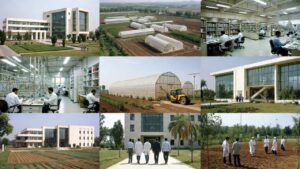
Its Higher Education Commission (HEC) ranking consistently places it among Pakistan’s top universities, and it has received international recognition for research contributions in plant sciences, soil science, and food technology.
UAF’s Role in Pakistan’s Food Security Today
Pakistan faces serious agricultural challenges in the 21st century: climate change is altering rainfall patterns and increasing the frequency of extreme weather events; water scarcity is intensifying in arid regions; soil degradation threatens long-term productivity; and a growing population demands ever more from the land.
UAF is squarely engaged with all of these challenges. Its researchers are developing drought-resistant and heat-tolerant crop varieties, studying the impact of climate variability on agricultural systems, and developing precision agriculture techniques that help farmers do more with less.
The university also plays a vital role in agricultural education policy — its faculty serve on national commissions, contribute to curriculum design across Pakistan’s university system, and help shape the direction of agricultural research funding.
In a country where agriculture accounts for roughly a fifth of GDP and employs nearly 40% of the workforce, the work UAF does is not academic in the dismissive sense of the word. It is profoundly practical and profoundly important.
Conclusion: A Legacy Rooted in the Soil, A Vision Reaching Forward
From a modest colonial college established in 1906 to a nationally recognized research university with global partnerships, the University of Agriculture, Faisalabad has traveled an extraordinary distance. Its history mirrors Pakistan’s own — built on ambition, tested by adversity, and sustained by the conviction that science in service of the people is never wasted.
For students choosing where to study agricultural science in Pakistan, for researchers seeking a home for serious inquiry, and for a nation that must grow more food on the same — or shrinking — land, UAF represents both a proud inheritance and a living promise.
The soil of the Punjab has always been generous. UAF exists to make sure Pakistan knows how to honor it.
Interested in Pakistan’s agricultural education landscape? Explore more about UAF Pakistan, the history of agricultural universities in South Asia, and the ongoing work in food security research across the developing world.